Dedicated team or shared agents: which outsourcing model fits you?
The difference between a dedicated outsourced team and a shared pool of agents, and how to choose based on volume, complexity, control and budget.

On this page
When you outsource, you can either have people who work only on your account or share agents with other clients. Both models work. The right one depends on your volumes, how complex your product is and how much control you want.
What a dedicated team means
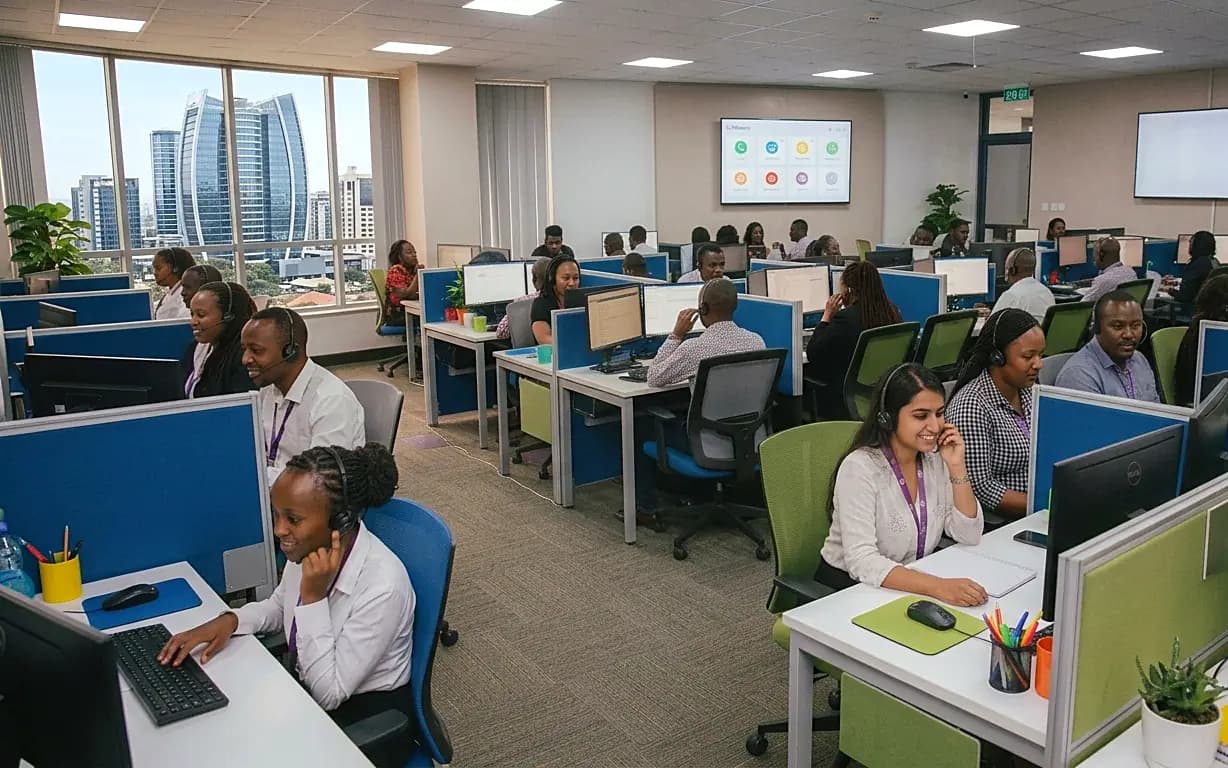
A dedicated team spends all of its time on your work. You help define the roles, you can interview candidates, and the team learns your products, tools and culture in depth. The outsourcing partner handles recruitment, office space, equipment, payroll, HR and replacements.
In practice it feels like opening your own office in another country, without setting up a legal entity, signing a lease or building an HR function. That is why it is often described as having an in-house feel.
What a shared model means
In a shared model, a pool of trained agents handles work for several clients. You pay for the volume you use, often per contact or per hour, rather than for full-time people.
This makes sense when volumes are small or unpredictable, or when the work is simple enough that agents can switch between clients without losing quality.
How they compare
| Dedicated team | Shared agents | |
|---|---|---|
| Product knowledge | Deep, builds over time | Good for simple products |
| Control | High: you shape hiring and priorities | Lower: the partner allocates people |
| Cost structure | Per agent per month | Per contact or per hour |
| Best volume | Steady, enough to keep people busy | Low or very variable |
| Scaling | Add people in weeks | Flexes immediately within the pool |
Questions that point to the right model
- 1Do you have enough work to keep at least one person busy full time? If not, start shared.
- 2Is your product complex? Technical products and regulated processes usually need dedicated people.
- 3Do you want to shape the team's culture and priorities? Choose dedicated.
- 4Are volumes highly seasonal? Consider a dedicated core team plus overflow cover for peaks.
The hybrid approach
Many growing businesses start with a small shared allocation, then move to a dedicated team once volumes are steady. Others run a dedicated core team and keep a trained overflow pool for launches and seasonal peaks. A good partner will design this with you rather than force one model.
What to expect from a dedicated team partner
- You approve hires and direct the daily work.
- A pre-screened bench means leavers are replaced within weeks, with a proper hand-over.
- One monthly invoice covers people, office, equipment, internet and power backup.
- A named account manager, and typically a 12-month renewable commitment.
Read more about how our dedicated offshore teams work, or about virtual assistants if you need one person rather than a team.
Frequently asked questions
Who is the legal employer of a dedicated team?
With Maxed BPO, we are the employer of record in Kenya, so you do not need a local entity.
How big can a dedicated team be?
Anything from one person to more than a hundred, growing as your needs grow.
Not sure which model fits? Tell us about your volumes and we will suggest a starting shape.
Topics
- dedicated teams
- outsourcing models
- scaling
Maxed BPO team
Outsourcing specialists in Nairobi
Written by the people who recruit, train and run outsourced teams at Maxed BPO every day.